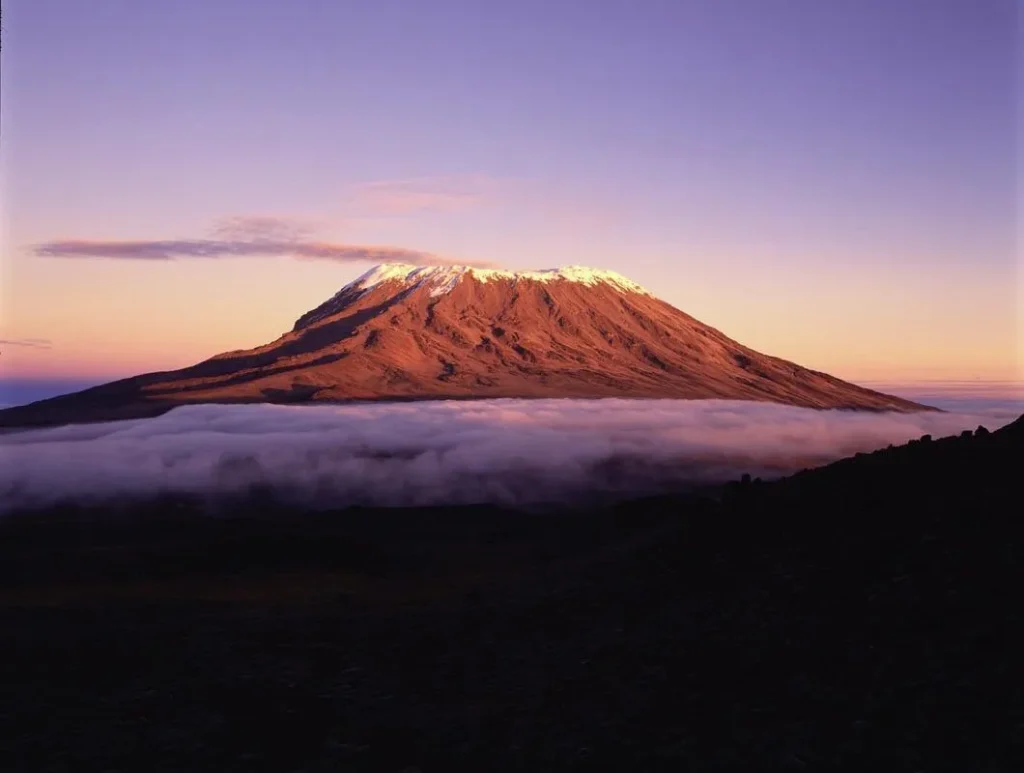
6 Days Kilimanjaro Climbing – Umbwe Route
Climbing OVERVIEW
The Umbwe Route on Mount Kilimanjaro is widely recognized as the most challenging and least traveled trail on the mountain. Its steep, rapid ascent makes acclimatization difficult, so hikers must be physically fit and confident in their ability to cope with high altitude. Although fewer climbers attempt this route, the rewards are spectacular, offering dramatic scenery and a sense of adventure far from the busier trails. The route follows the southern slopes of Kilimanjaro, starting at Umbwe Gate, moving through Barranco and Karanga, before reaching Barafu Camp and ascending to Uhuru Peak. Descent is via the scenic Mweka trail.
Day 1: Umbwe Gate → Umbwe Camp
After breakfast in Moshi or Arusha, you will be driven to Machame Gate for registration and briefings, then onward through villages, coffee plantations, and banana farms to reach Umbwe Gate. The trek begins with a steep climb through dense, lush rainforest. The trail winds sharply along a ridge flanked by two rivers, surrounded by massive trees and thick undergrowth. The challenging ascent covers approximately 11 kilometers (7 miles) and takes 5–7 hours, demanding good fitness. Umbwe Camp is tucked among the trees, providing a sheltered spot to rest. The dense forest and rising altitude make this day a true introduction to the mountain.
Day 2: Umbwe Camp → Barranco Camp
The second day is shorter but steep, covering 6 kilometers (4 miles) in 4–5 hours. The trail leaves the dense rainforest behind and enters rockier terrain with sparse undergrowth and moss-covered trees. Climbers gain elevation gradually, revealing spectacular views of Kilimanjaro’s slopes and surrounding valleys. From the Umbwe Ridge, the route descends into the Barranco Valley, passing through the striking Senecio Forest, with its unusual and beautiful vegetation. Barranco Camp is located in a sheltered valley surrounded by mountains, providing a peaceful setting to rest. This stage combines moderate climbing with scenic exploration, giving hikers a chance to adjust to higher altitudes.
Day 3: Barranco Camp → Karanga Camp
Today’s hike begins by descending into a ravine at the base of the Great Barranco Wall. The ascent up the non-technical but steep wall rises nearly 900 feet, offering panoramic views of the surrounding valleys. After summiting the wall, the route traverses a series of hills and small valleys before descending into Karanga Valley. The final climb is steep but short, leading to Karanga Camp, nestled in the alpine desert zone. This section is intentionally shorter to allow for proper acclimatization. Hiking 5 kilometers (3 miles) over 4–5 hours, climbers experience the mountain’s transition from forested areas to sparse, rocky landscapes.
Day 4: Karanga Camp → Barafu Camp
The fourth day covers 4 kilometers (2 miles) over 4–5 hours, ascending through the alpine desert zone toward Barafu Camp. Leaving Karanga Camp in the morning, hikers reach a junction that connects with the Mweka Trail before continuing up a rocky, steep section toward Barafu. This camp serves as the final resting point before the summit attempt, offering breathtaking views of Kilimanjaro’s two peaks, Kibo and Mawenzi. Completing this stage means finishing the southern circuit, providing diverse perspectives of the mountain. Climbers are encouraged to rest, hydrate, and eat an early dinner in preparation for the demanding summit hike that begins around midnight the following day.
Day 5: Barafu Camp → Uhuru Peak → Mweka Camp
Summit day begins around midnight with a challenging 5-kilometer (3-mile) ascent over 7–8 hours through the Arctic zone. Climbers move slowly and steadily in darkness, stopping frequently for short rests. Near Stella Point, the first rays of sunrise illuminate Kilimanjaro, providing unforgettable views of Mawenzi and the surrounding landscapes. After reaching Uhuru Peak, the highest point in Africa, hikers celebrate with photos and reflection on their achievement. The descent begins immediately, first back to Barafu Camp for lunch, then continuing 12 kilometers (7 miles) down to Mweka Camp in the rainforest. This is a long, tiring day but rewarding, with diverse habitats and spectacular scenery.
Day 6: Mweka Camp → Mweka Gate
On the final day, climbers enjoy breakfast and a warm ceremony with their team, appreciating the guides and porters who supported the trek. The descent from Mweka Camp to Mweka Gate covers approximately 9.1 kilometers (6 miles) and takes 3–4 hours through dense rainforest. At the gate, climbers receive their summit certificates and celebrate their accomplishment. From here, a vehicle transfers the group back to Moshi, about 30 minutes away, or to Arusha, roughly 95 kilometers. This final stage provides time to relax, reflect, and enjoy the mountain’s natural beauty one last time before returning to civilization.
Included
- Porterage
- Climbing gear
- Park fees(For non-residents)
- All activities(Unless labeled as optional)
- All accommodation(Unless listed as upgrade)
- A professional driver/guide
- All transportation(Unless labeled as optional)
- All Taxes/VAT
- Roundtrip airport transfer
- Meals(As specified in the day-by-day section)
- Drinking water(On all days)
Excluded
- Rescue fee
- International flights(From/to home)
- Additional accommodation before and at the end of the tour
- Tips(Tipping guideline US$15.00 pp per day)
- Personal items(Souvenirs, travel insurance, visa fees, etc.)
- Government imposed increase of taxes and/or park fees